
Introduction
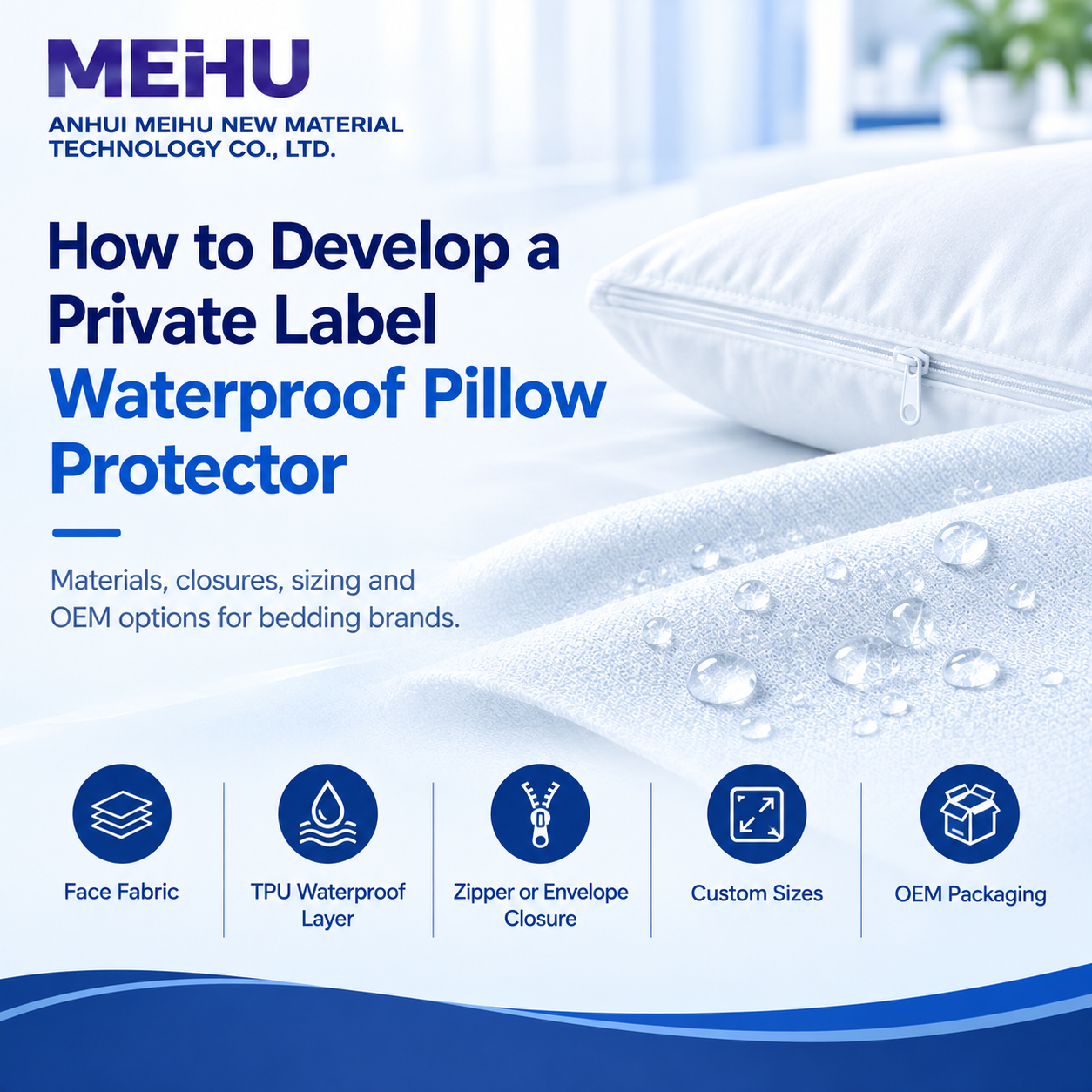
For bedding brands, wholesalers, hotel suppliers, and private label companies, a waterproof pillow protector can be a practical addition to an existing bedding product range. However, developing a product for commercial sale involves more than choosing a waterproof fabric and adding a zipper.
The material must provide the required liquid protection while maintaining a comfortable feel. The design needs to fit different pillow sizes, and the construction must suit the intended use, washing conditions, target market, and price range.
Working with an experienced waterproof pillow protector manufacturer can help buyers coordinate these requirements before moving from samples to bulk production.
This guide explains the main decisions B2B buyers should consider when developing a custom waterproof pillow protector.
1. Define the Product’s Intended Application
The first step is to identify who will use the pillow protector and under what conditions.
Different applications may require different materials and product constructions.
Home bedding and retail brands
Products for home use often prioritize softness, quiet performance, easy care, and compatibility with common pillow sizes. Buyers may also need several colors or packaging configurations for their product range.
Hotels and hospitality suppliers
Commercial buyers may place greater emphasis on repeated laundering, consistent sizing, reliable supply, and practical product maintenance. Material selection should reflect the expected washing process and operating conditions.
Healthcare and care-related applications
These products may require clearly defined liquid-barrier performance and additional material or product testing. Buyers should specify the relevant requirements instead of assuming that every waterproof pillow protector is suitable for every care environment.
Before requesting quotations, prepare a short product brief covering the target application, expected use, target price range, estimated order quantity, and required delivery schedule.
2. Choose the Right Face Fabric
The face fabric has a major influence on how a waterproof pillow protector feels and performs.
Common material options include:
Knitted polyester: Flexible and suitable for pillow protectors designed to fit closely around a pillow.
Microfiber: Provides a smooth surface and is often considered for bedding products where a soft hand feel is important.
Cotton terry: Offers a textured, absorbent surface that may suit products designed around a more traditional bedding feel.
Other customized textile constructions: Can be considered according to the product’s appearance, hand feel, cost, and performance requirements.
The best option depends on the combination of the textile and waterproof layer, not just the face fabric alone.
When evaluating samples, check softness, stretch, surface texture, noise during movement, sewing performance, and appearance after washing. If a particular fabric composition or weight is essential, include it in the written specification.
3. Select the Waterproof Membrane
A TPU membrane is commonly used in waterproof bedding because it can provide a liquid barrier while allowing manufacturers to develop flexible, lightweight textile constructions.
However, not all TPU laminated fabrics have identical performance. Results can vary according to the membrane, its thickness, the face fabric, and the lamination process.
Before placing an order, discuss the following details with your supplier:
Required TPU membrane thickness
Target waterproof performance and test method
Desired fabric weight and flexibility
Expected washing frequency and care conditions
Any breathability or water vapor transmission requirements
Relevant product-specific testing requirements
Avoid selecting a material on the basis of membrane thickness alone. A thicker membrane does not automatically guarantee better durability or a more comfortable finished product.
For repeat-use products, request samples and evaluate waterproof performance before and after an appropriate washing procedure. The acceptance criteria should be agreed upon before mass production.
4. Choose the Right Closure Design
The closure affects convenience, appearance, manufacturing cost, and the way the pillow protector fits.
Two common design directions are:
Zipper closure
A zipper closure allows the pillow to be enclosed within the protector. Buyers should specify zipper length, position, slider type, stitching construction, and any requirements for covering or protecting the zipper area.
The zipper and seams should be evaluated as part of the finished product. A waterproof textile does not automatically make the entire assembled pillow protector waterproof, especially around stitching and openings.
Envelope-style closure
An envelope-style design uses an overlapping fabric section rather than a zipper. It can provide a simple appearance and avoid a zipper component, but the overlap dimensions and pillow fit need to be checked carefully.
The appropriate design depends on the target market, product positioning, cost, ease of use, and required level of liquid protection.
If closure-related liquid resistance is essential, define how the finished product will be tested. Do not rely on the fabric specification alone.
5. Confirm Pillow Sizes and Product Construction
Pillow dimensions can vary between markets and customers. A size that works for one pillow type may not provide the correct fit for another.
Before sampling, confirm:
Finished length and width
Pillow thickness or loft, where relevant
Required fit and ease allowance
Closure position and dimensions
Sewing construction and seam allowance
Tolerance for finished product measurements
If you plan to sell several sizes, ask the manufacturer to develop a size specification for each version rather than simply scaling one design without checking the fit.
For customized programs, buyers should also confirm whether each size requires a separate sample approval.
6. Develop a Clear OEM Specification
A detailed specification helps reduce misunderstandings between the buyer and the manufacturer.
A practical waterproof pillow protector specification may include the following information:
Specification Details to Confirm
Product type Zippered or envelope-style pillow protector
Face fabric Material composition and construction
Fabric weight Target GSM, where applicable
Waterproof layer TPU membrane requirements
Performance Waterproof test method and acceptance criteria
Dimensions Finished sizes and tolerances
Closure Type, length, position, and construction
Color Standard color or custom color requirements
Labeling Brand label, care label, and required product information
Packaging Individual bag, insert, carton, and barcode requirements
Order quantity Sample quantity and expected bulk quantity
If your brand has a specific packaging design or retail presentation, provide the artwork and packing instructions early enough for review before production.
Specifications should identify which features are mandatory and which can be adjusted to meet the target cost.
7. Test Samples Before Bulk Production
A sample approval process should cover both the raw material and the finished pillow protector.
A recommended evaluation process includes:
Step 1: Inspect the material. Check fabric appearance, hand feel, dimensions, and visible lamination defects.
Step 2: Evaluate waterproof performance. Use the agreed test method and criteria for the selected material.
Step 3: Check the finished construction. Inspect seams, closure operation, dimensions, and overall workmanship.
Step 4: Evaluate care performance. Where the product will be washed repeatedly, test the sample under the intended care conditions and recheck relevant properties.
Step 5: Confirm packaging and labeling. Ensure that the sample reflects the proposed production requirements.
Keep an approved reference sample and written specification. These provide a common basis for checking consistency during mass production.
8. Compare OEM Suppliers Beyond the Unit Price
The lowest quotation is not necessarily the lowest-cost option for a private label project.
When comparing waterproof pillow protector suppliers, consider whether they can explain their material construction, provide appropriate samples, communicate clearly about customization, and maintain consistent specifications across orders.
Useful questions include:
Can you recommend a suitable fabric construction for our application?
Can you provide samples before bulk production?
What product testing can you support?
Can you accommodate our required sizes and packaging?
How do you control product consistency between production batches?
What are the sample lead time, production lead time, MOQ, and payment terms for this project?
Ask each supplier to quote against the same specification so that the differences in price and scope can be compared fairly.
Conclusion
Developing a private label waterproof pillow protector requires coordinated decisions about face fabric, TPU membrane, closure design, dimensions, testing, and packaging.
For bedding brands, wholesalers, and other B2B buyers, a clear specification and an agreed sample approval process help reduce development risks and support more consistent bulk production.
Anhui Meihu New Material Technology Co., Ltd. supplies waterproof bedding products and TPU laminated waterproof fabrics for B2B customers. We support discussions about material selection and customized product requirements according to the needs of each project.
Contact our team to discuss your waterproof pillow protector project, target specifications, and sampling requirements.
Email: trade@anhuimeihu.com
Website: www.meihumaterial.com
Post time: Oct-27-2026