
Introduction
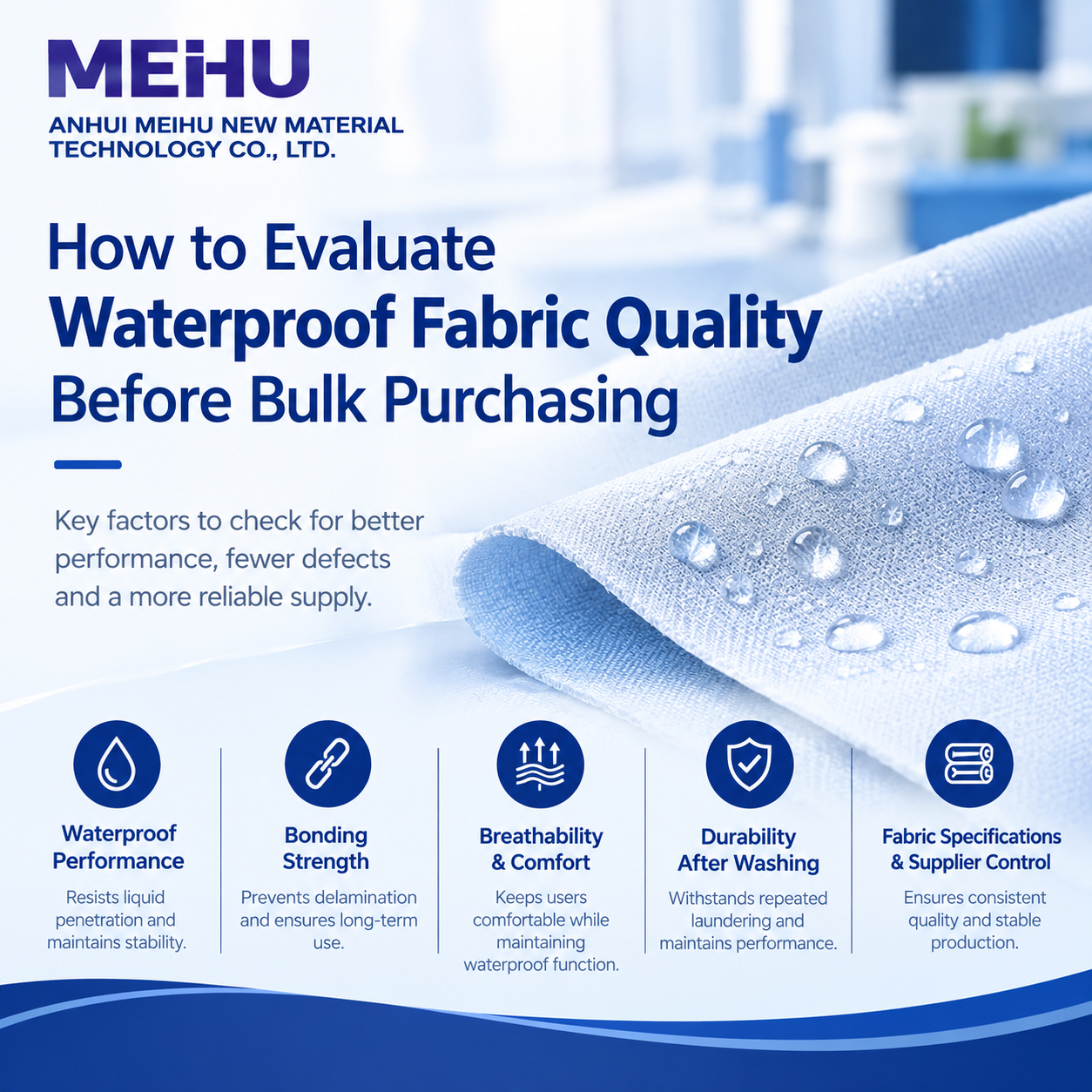
Choosing the right waterproof fabric is an important decision for manufacturers of mattress protectors, mattress covers, bedding products, and healthcare textiles. A fabric may look good in a sample but perform differently after repeated washing, stretching, or long-term use.
For B2B buyers, evaluating waterproof fabric quality before bulk purchasing helps reduce product defects, avoid costly returns, and maintain consistent production quality.
So, what should you check before placing a bulk order?
1. Check the Fabric Structure and Raw Materials
The performance of waterproof fabric depends on its construction and material composition.
Common options for mattress protector fabric include:
Knitted polyester fabric: Lightweight, flexible, and suitable for fitted mattress protectors.
Cotton terry fabric: Soft and absorbent on the surface, suitable for bedding applications.
Microfiber fabric: Smooth and comfortable, often used in mattress covers and protective bedding.
TPU laminated fabric: Combines a textile surface with a thermoplastic polyurethane waterproof membrane.
When comparing suppliers, confirm the face fabric composition, fabric weight (GSM), usable width, membrane type, and lamination method.
These specifications help ensure that the fabric meets your product design and manufacturing requirements.
2. Verify Waterproof Performance
Waterproof performance is one of the most important quality indicators for waterproof mattress protector fabric.
However, the term “waterproof” alone does not provide enough technical information. Buyers should ask suppliers for test results and the relevant testing method.
Important factors include:
Hydrostatic pressure resistance
Water leakage under expected use conditions
Performance after repeated washing
Consistency between production batches
The required performance depends on the final application. A mattress protector for everyday home use may have different requirements from a product designed for healthcare or intensive-care environments.
Before bulk production, agree on the required performance level and how it will be verified.
3. Evaluate Lamination and Bonding Strength
For TPU laminated fabric, waterproof performance depends not only on the membrane itself but also on the quality of the bond between the textile and the TPU film.
Poor bonding may lead to delamination, bubbling, or separation during use and washing.
Ask your supplier how lamination quality is controlled and whether bonding performance can be evaluated through appropriate testing.
During sample evaluation, look for visible defects such as uneven surfaces, bubbles, wrinkles, or areas where the layers appear to separate. These visual checks are useful, but they cannot replace formal bonding tests.
For bulk orders, establish clear acceptance criteria before production begins.
4. Consider Breathability and Comfort
A waterproof membrane needs to prevent liquid penetration while maintaining an acceptable level of comfort.
The final performance depends on the combination of face fabric, TPU membrane, fabric structure, and lamination process.
For mattress protectors, consider:
Whether the surface feels soft against the skin
Whether the fabric is flexible enough for the intended design
Whether the material creates excessive heat or discomfort during use
Whether the finished product makes unwanted noise when users move
Breathability requirements vary by product. If air permeability or water vapor transmission is important to your market, request relevant test data rather than relying on general descriptions.
5. Test Durability After Washing
A waterproof fabric that performs well when new may lose performance after repeated laundering.
For reusable mattress protectors and bedding products, washing durability is particularly important.
A practical evaluation process should consider:
1.Test the initial waterproof performance.
2.Wash the sample according to the intended care instructions.
3.Repeat the waterproof test using the same method.
4.Inspect the fabric for delamination, shrinkage, surface damage, and changes in hand feel.
5.Record the results against your agreed specifications.
The number of washing cycles should reflect the product’s intended use and your quality requirements.
Do not assume that all TPU laminated fabrics have the same washing durability. Results depend on the membrane, textile, adhesive or bonding process, and manufacturing quality.
6. Check Fabric Width, GSM, and Production Consistency
Technical specifications also affect manufacturing efficiency and cost.
Before ordering, confirm:
GSM: The weight of the fabric per square meter.
Usable width: The actual width available for cutting and production.
TPU thickness: The membrane thickness required by your product specification.
Color consistency: Whether bulk fabric matches the approved sample.
Roll consistency: Whether the fabric maintains consistent width, weight, appearance, and performance.
For example, insufficient usable width can increase cutting waste, while inconsistent fabric weight may affect the finished product’s feel and construction.
A detailed technical specification sheet helps both parties avoid misunderstandings.
7. Evaluate the Supplier’s Quality Control Process
A reliable waterproof fabric supplier should be able to explain how product quality is controlled from sampling to mass production.
Useful questions include:
Can you provide a technical data sheet for the selected fabric?
Can you arrange samples for evaluation before bulk production?
How do you inspect lamination defects and fabric appearance?
Can you test waterproof performance before shipment?
How do you manage batch-to-batch consistency?
What is the procedure if a quality issue is identified?
For customized projects, confirm whether the supplier can maintain the approved material structure and specifications throughout production.
Clear communication is especially important when sourcing from overseas manufacturers.
8. Approve a Sample Before Mass Production
Sample approval should be based on more than appearance.
Before placing a bulk order, document the approved fabric composition, GSM, width, TPU thickness, color, waterproof requirements, and relevant durability criteria.
Where necessary, approve both the raw laminated fabric and the finished mattress protector. The performance of a finished product may also depend on its seams, stitching, zipper, and overall construction.
Keep a reference sample and use the agreed specifications for incoming quality inspections.
Conclusion
Evaluating waterproof fabric before bulk purchasing is an essential step for mattress protector manufacturers and bedding brands.
By checking material structure, waterproof performance, bonding strength, comfort, washing durability, technical specifications, and supplier quality control, buyers can make more informed sourcing decisions.
At Anhui Meihu New Material Technology Co., Ltd., we manufacture TPU laminated waterproof fabrics and waterproof bedding products for B2B customers. We support material selection and customized development based on product requirements.
If you are sourcing waterproof fabric for mattress protectors, mattress covers, or other bedding applications, contact our team to discuss your specifications and sampling requirements.
Contact: trade@anhuimeihu.com
Website: www.meihumaterial.com
Post time: Oct-15-2026