
Sourcing waterproof fabrics from overseas manufacturers offers many advantages, including competitive pricing, wider material options, and flexible OEM capabilities. However, international sourcing also introduces risks that can affect product quality, production schedules, and customer satisfaction.
Many buyers focus heavily on price during the quotation stage, only to encounter unexpected problems after production begins. In most cases, these issues could have been avoided with better supplier evaluation and clearer communication.
Whether you’re sourcing TPU laminated fabrics for mattress protectors, healthcare bedding, hospitality products, or pet care applications, reducing quality risks should always be part of your purchasing strategy.
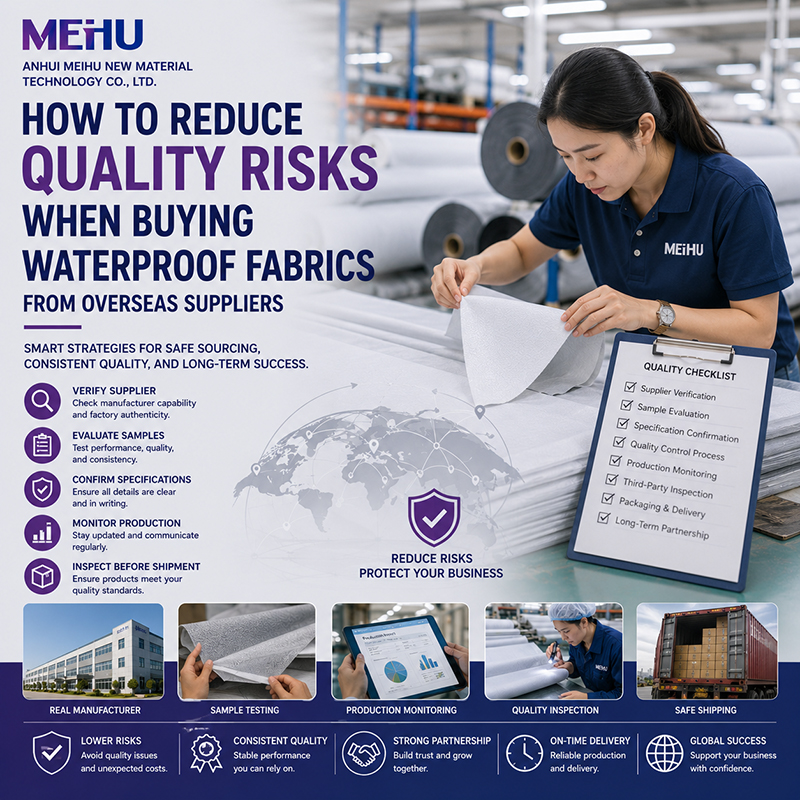
Here are eight practical ways to help ensure a successful sourcing experience.
Verify That You’re Working with a Real Manufacturer
The first step is confirming whether the company is an actual manufacturer or simply a trading company.
A manufacturer is more likely to provide:
- Better production control
- Faster technical support
- Stable quality management
- Greater flexibility for OEM projects
Before placing an order, ask about:
- Factory location
- Production equipment
- Manufacturing capacity
- Factory photos or videos
- Production certifications
If possible, arrange a factory visit or request a virtual tour.
Never Skip Sample Evaluation
A sample is your first opportunity to evaluate both the product and the supplier.
Check the sample carefully for:
- Waterproof performance
- Fabric appearance
- Lamination quality
- Breathability
- Fabric hand feel
- Color consistency
Don’t hesitate to ask questions if anything seems unclear.
The more issues resolved during sampling, the fewer surprises you’ll face during mass production.
Confirm Every Technical Specification
Never rely solely on product names such as “waterproof knitted fabric” or “TPU laminated fabric.”
Instead, confirm every key specification, including:
- Face fabric
- Fabric composition
- GSM
- Width
- TPU membrane thickness
- Color
- Roll length
- Washing requirements
- Packaging method
Written specifications help prevent misunderstandings between buyer and supplier.
Understand the Supplier’s Quality Control Process
A reliable supplier should have a clear quality management system.
Ask questions such as:
- How are raw materials inspected?
- How often are production checks performed?
- What waterproof tests are conducted?
- Is every production batch inspected before shipment?
Manufacturers with standardized quality procedures usually achieve more consistent results.
Request Production Updates
Good communication should continue after the order is placed.
Ask your supplier to share:
- Production progress
- Factory photos
- Production videos
- Inspection reports
- Packaging updates
Regular updates help identify potential issues early and build confidence throughout the production process.
Consider Third-Party Inspection
For larger orders, independent inspection services can provide additional assurance.
A third-party inspection can verify:
- Product specifications
- Appearance
- Quantity
- Packaging
- Loading condition
Although not required for every order, third-party inspections are often worthwhile for new suppliers or high-value shipments.
Don’t Choose a Supplier Based on Price Alone
A significantly lower quotation may indicate differences in:
- Raw material quality
- TPU thickness
- Quality control
- Production equipment
- Technical support
The lowest price doesn’t always deliver the lowest total cost.
Poor quality can lead to returns, production delays, and damaged customer relationships.
Build Long-Term Partnerships
Successful sourcing isn’t just about completing one order.
Working with a reliable supplier over time offers several advantages:
- More stable product quality
- Better communication
- Faster product development
- Greater production flexibility
- Improved pricing for future projects
Long-term cooperation often delivers greater value than frequently changing suppliers.
A Simple Quality Risk Checklist
Before confirming your order, ask yourself:
- Have I verified the supplier’s manufacturing capability?
- Have I approved the production sample?
- Are all specifications confirmed in writing?
- Do I understand the supplier’s quality control process?
- Will I receive production updates?
- Is packaging clearly defined?
- Have delivery schedules been confirmed?
- Do both parties understand the quality requirements?
If you can answer “Yes” to each question, your sourcing risk is already much lower.
Final Thoughts
International sourcing doesn’t have to be risky.
Most quality problems can be prevented through careful planning, clear specifications, thorough sample evaluation, and open communication with your manufacturing partner.
Choosing a supplier that values transparency, consistent quality, and long-term cooperation will help protect both your products and your brand reputation.
Looking for a Reliable Waterproof Fabric Manufacturing Partner?
At Meihu, we work closely with bedding brands, distributors, healthcare suppliers, and hospitality companies worldwide to provide stable, high-quality TPU laminated waterproof fabrics.
From sample development to bulk production, our team supports customers with transparent communication, strict quality control, and customized OEM solutions.
Post time: Jul-30-2026