
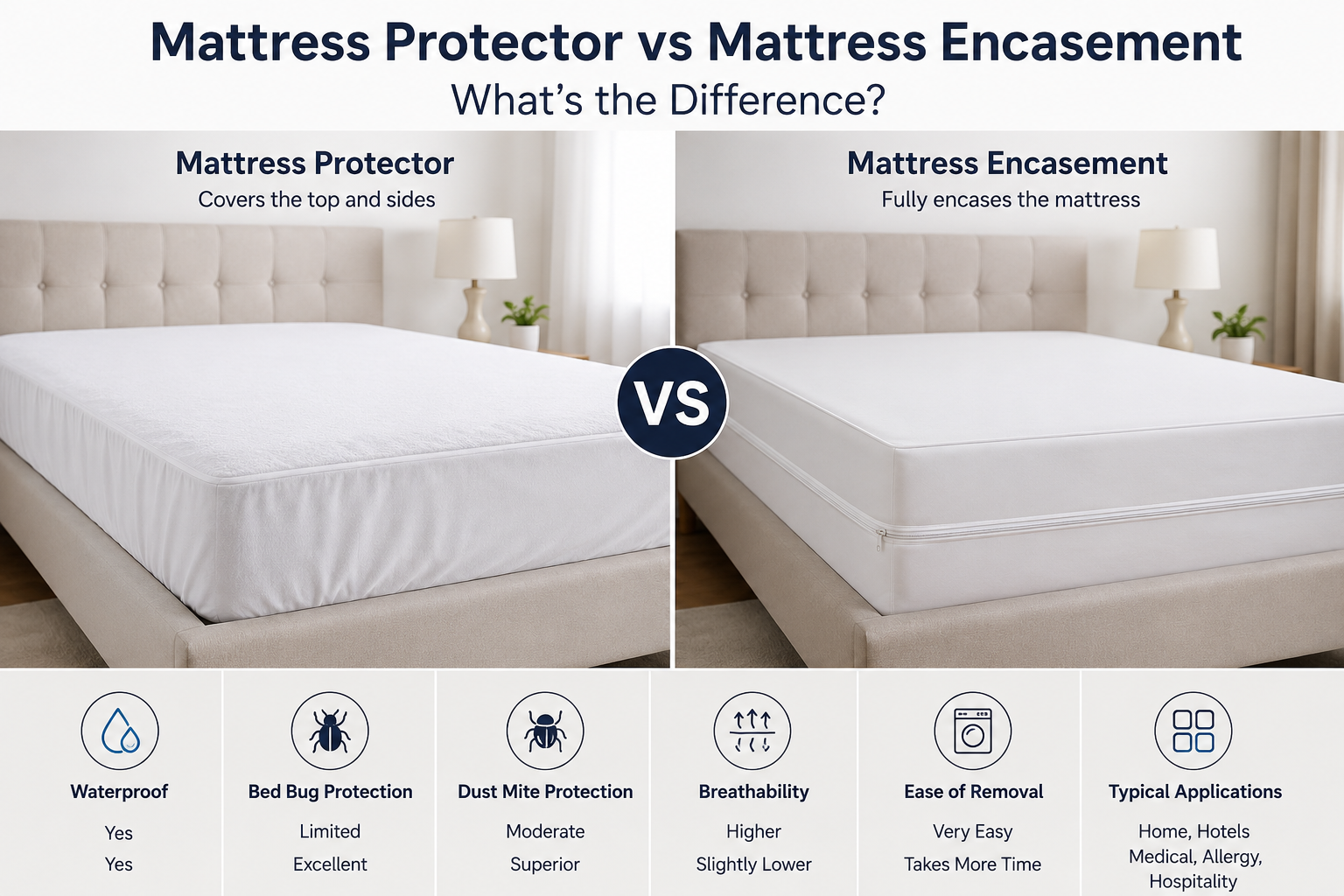
When shopping for bedding protection products, many buyers confuse a mattress protector with a mattress encasement. Although both are designed to protect mattresses, they serve different purposes and are used in different environments.
Understanding the difference between a mattress protector and a mattress encasement can help hotels, hospitals, retailers, and home users choose the right product for their needs.
At Meihu Material, we manufacture OEM TPU waterproof mattress protectors and mattress encasements for global bedding brands, hospitality suppliers, healthcare projects, and e-commerce businesses.
In this guide, we’ll explain the key differences, advantages, applications, and how to choose the best option for your market.
What Is a Mattress Protector?
A mattress protector is a removable bedding layer placed on top of the mattress to protect it from:
Liquids and spills
Sweat and body oils
Dust and allergens
Stains
Daily wear and tear
Most waterproof mattress protectors use TPU laminated fabric to provide a waterproof barrier while remaining breathable and comfortable.
A mattress protector typically covers:
The top surface of the mattress
Sometimes the sides with fitted skirt design
It is similar to a fitted sheet and can be easily removed for washing.
What Is a Mattress Encasement?
A mattress encasement completely surrounds the mattress on all six sides and usually includes a zipper closure.
Unlike standard protectors, mattress encasements are designed for:
Full mattress protection
Bed bug prevention
Dust mite protection
Allergy control
Long-term hygiene management
Because the mattress is fully enclosed, encasements offer higher-level protection compared to traditional mattress protectors.
They are commonly used in:
Hospitals
Hotels
Dormitories
Nursing homes
Allergy-sensitive environments
Mattress Protector vs Mattress Encasement: Key Differences
| Feature | Mattress Protector | Mattress Encasement |
| Coverage | Top + sides | Full 6-sided coverage |
| Installation | Fitted sheet style | Zipper enclosure |
| Waterproof Protection | Yes | Yes |
| Bed Bug Protection | Limited | Excellent |
| Dust Mite Protection | Moderate | Superior |
| Breathability | Higher | Slightly lower |
| Ease of Removal | Very easy | Takes more time |
| Typical Applications | Home, hotels | Medical, allergy, hospitality |
| Cost | Lower | Higher |
Which One Is Better?
The answer depends on the intended application.
Choose a Mattress Protector If You Need:
Daily waterproof protection
Comfortable sleeping experience
Easy washing and maintenance
Affordable bedding protection
Hotel or residential use
Waterproof mattress protectors are currently the most popular option in the hospitality and home bedding market.
Choose a Mattress Encasement If You Need:
Complete mattress coverage
Bed bug protection
Allergy prevention
Medical-grade hygiene
Long-term mattress preservation
Mattress encasements are ideal for healthcare institutions, student housing, and environments requiring strict sanitation standards.
TPU Waterproof Technology: Why It Matters
Modern premium mattress protectors and encasements often use TPU laminated waterproof membranes.
Benefits of TPU Waterproof Fabric
100% waterproof
Breathable
Soft and noiseless
PVC-free
Eco-friendly
Durable after repeated washing
Compared with PVC materials, TPU provides a more comfortable sleeping experience and better long-term durability.
At Meihu Material, we specialize in TPU waterproof laminated fabrics and finished bedding products for OEM and private label customers worldwide.
Common Fabric Options for Mattress Protectors
Different fabric surfaces affect comfort, durability, and market positioning.
Terry Fabric
Soft and absorbent
Popular for residential use
Comfortable sleeping surface
Knitted Fabric
Stretchable and breathable
Smooth hand feel
Modern premium appearance
Microfiber Fabric
Durable and lightweight
Cost-effective
Easy to maintain
Quilted Fabric
Extra cushioning
Premium hotel-style comfort
Luxury bedding applications
Industries That Use Waterproof Mattress Protection
Hospitality Industry
Hotels use waterproof mattress protectors to:
Extend mattress lifespan
Improve hygiene
Reduce replacement costs
Protect against accidental spills
Healthcare & Medical
Hospitals and nursing homes require waterproof encasements for infection control and sanitation management.
Baby & Elderly Care
Waterproof bedding products help manage:
Bedwetting
Incontinence
Daily hygiene protection
Pet Care
Pet owners increasingly use waterproof protectors to prevent:
Pet accidents
Odors
Fur contamination
How to Choose the Right Supplier
When sourcing waterproof bedding products, buyers should evaluate suppliers based on:
TPU lamination capability
OEM/ODM support
Quality consistency
Certifications
MOQ flexibility
Export experience
Packaging customization
Working directly with a manufacturer can help reduce costs and improve product customization.
OEM Waterproof Mattress Protectors from China
As a professional waterproof bedding manufacturer, Meihu Material offers:
TPU waterproof mattress protectors
Mattress encasements
Waterproof pillow protectors
Waterproof laminated fabrics
OEM & private label services
We support:
Custom sizes
Custom fabrics
Logo printing
Packaging design
Bulk wholesale production
Our products are widely used in:
Hotels
Healthcare
Retail bedding brands
E-commerce businesses
Pet care markets
Frequently Asked Questions
Is a mattress encasement waterproof?
Yes. Most premium mattress encasements use TPU waterproof membranes to prevent liquid penetration while maintaining breathability.
Can mattress protectors stop bed bugs?
Standard mattress protectors provide limited protection. Full zippered mattress encasements are more effective for bed bug prevention.
Are waterproof mattress protectors breathable?
High-quality TPU waterproof protectors are breathable and noiseless, unlike older PVC products.
How often should mattress protectors be washed?
Most manufacturers recommend washing every 1–2 months or immediately after spills or accidents.
What is the difference between TPU and PVC waterproof materials?
TPU is softer, breathable, eco-friendly, and more durable than PVC, making it the preferred material for premium waterproof bedding products.
Conclusion
Both mattress protectors and mattress encasements play important roles in mattress hygiene and protection.
If you need comfortable daily waterproof protection, a mattress protector is usually the best choice.
If you need full coverage, allergy protection, or bed bug prevention, a mattress encasement offers more comprehensive protection.
Choosing the right waterproof bedding solution depends on your market, application, and customer expectations.
If you are looking for a reliable OEM waterproof bedding manufacturer in China, contact Meihu Material to learn more about our TPU waterproof fabrics, mattress protectors, and private label production services.
Post time: May-14-2026