
Introduction
Waterproof quilted fabric combines a quilted textile construction with a waterproof barrier, making it a material option for mattress protectors, mattress covers, protective bedding, and selected healthcare textile products.
For bedding manufacturers and B2B buyers, the challenge is finding a construction that balances surface comfort, appearance, thickness, waterproof performance, and manufacturing efficiency.
Different combinations of face fabric, filling, quilting pattern, and waterproof membrane can produce very different results. Understanding these components helps buyers specify a material that fits their product design and intended market.
This guide explains the main construction options and the factors to consider when sourcing customized waterproof quilted fabric.
1. What Is Waterproof Quilted Fabric?
Quilted fabric is typically made by stitching together two or more layers of textile material, sometimes with a filling layer between them. The stitching creates a decorative pattern and helps hold the layers together.
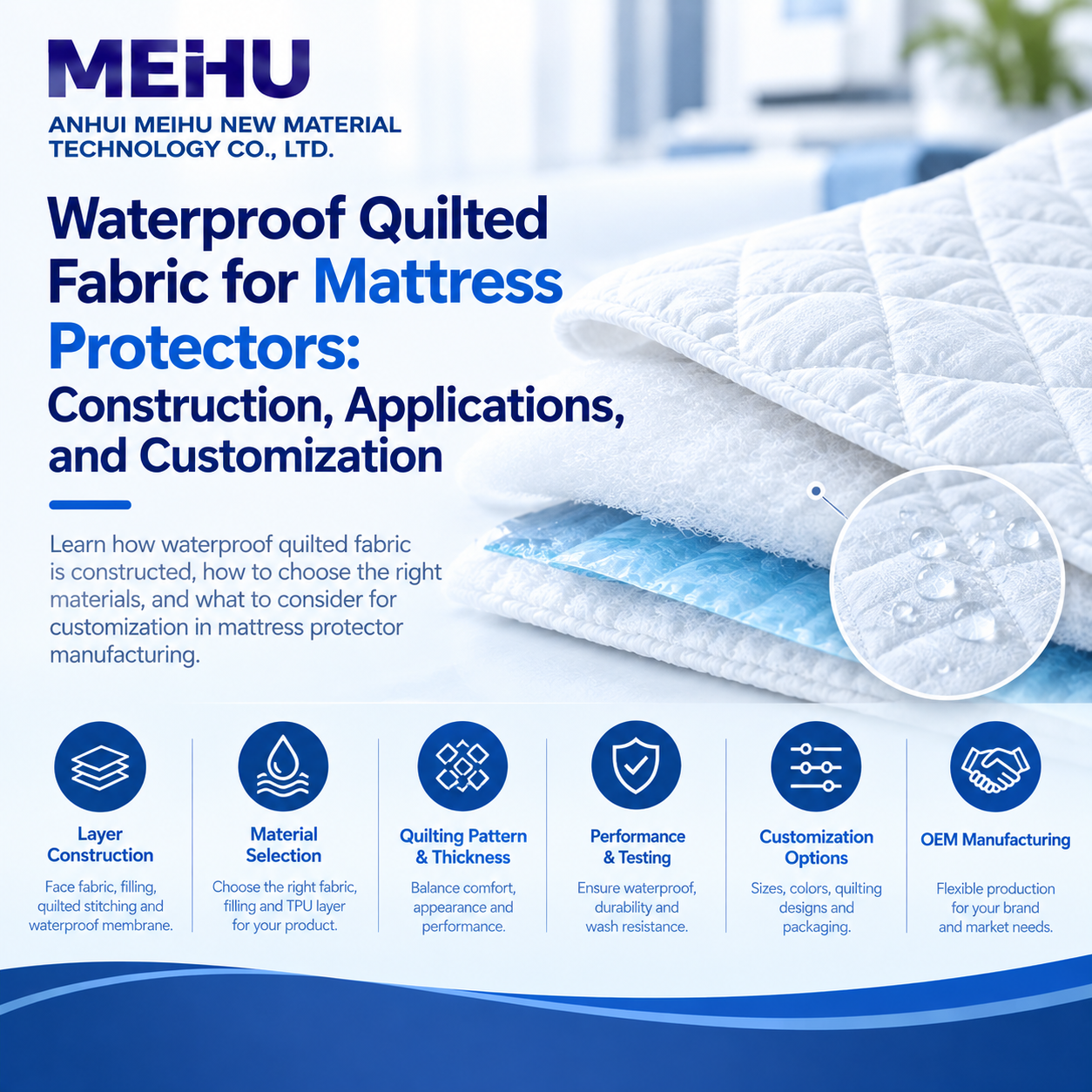
Waterproof quilted fabric incorporates an additional waterproof layer, such as a TPU membrane, into the overall construction.
Depending on the design, the structure may include:
Face fabric: The surface layer that determines much of the product’s appearance and hand feel.
Filling or padding: An optional layer used to create additional loft, softness, or a more cushioned feel.
Quilting stitches: Stitch lines that hold the quilted layers together in a selected pattern.
Waterproof membrane: A layer intended to provide resistance to liquid penetration.
The exact layer arrangement varies by product. Some materials use a waterproof membrane as a backing layer, while other constructions require a different arrangement to meet specific design requirements.
Buyers should confirm the actual layer structure rather than relying on the term “waterproof quilted fabric” alone.
2. Choose the Right Face Fabric
The face fabric affects the feel, appearance, and suitability of the finished mattress protector.
Common options include:
Polyester knitted fabric
Knitted polyester offers flexibility and can be suitable for fitted bedding products. The appropriate weight and construction depend on the desired softness, stretch, appearance, and production requirements.
Microfiber fabric
Microfiber can provide a smooth surface and a soft hand feel. It may be considered for bedding products where a uniform surface appearance is important.
Cotton or cotton-blend terry
Terry fabrics offer a textured surface and absorbency. They may suit designs that require a more traditional bedding feel, although the overall construction must still meet the intended liquid-barrier requirements.
Other customized textile surfaces
Additional fabric types can be evaluated when a project requires a particular texture, appearance, or price point.
When comparing options, assess the face fabric together with the filling, quilting pattern, and waterproof layer. A soft face fabric alone does not determine the comfort or performance of the completed product.
3. Understand the Role of the Waterproof Membrane
The waterproof membrane is a critical part of the material construction.
TPU laminated fabric is one option for creating a waterproof barrier in bedding products. It combines a textile layer with a thermoplastic polyurethane membrane.
For a quilted construction, buyers should establish how the waterproof layer is integrated and whether quilting or subsequent converting operations may affect the required performance.
Important specifications include:
TPU membrane thickness
Target waterproof performance
Test method and acceptance criteria
Face fabric composition and weight
Overall material thickness and flexibility
Performance after relevant washing or use conditions
A thicker membrane does not automatically mean that the complete material is better. The suitable construction depends on the application and the required balance between flexibility, comfort, waterproof performance, and cost.
For products that will be washed repeatedly, sample testing should cover the relevant performance before and after washing.
4. Select the Quilting Pattern and Padding
The quilting pattern influences the appearance, surface texture, and construction of the material.
Common design directions include straight-line quilting, diamond patterns, and other repeating geometric arrangements.
When developing a quilted material, consider the following factors.
Pattern and appearance
The pattern should match the intended product positioning and remain consistent across the material width. Buyers should review the pattern on a physical sample, as the visual effect may change with different fabrics and padding thicknesses.
Filling thickness
The filling affects loft, softness, bulk, and material consumption. A thicker filling may provide a more cushioned appearance, but it can also affect flexibility, cutting, sewing, and storage.
Stitch construction
Stitch density, thread choice, and quilting design should be suitable for the face fabric and filling. The selected structure should be assessed for puckering, uneven stitching, and dimensional stability.
Waterproof performance
Quilting may introduce stitch holes through certain layers, depending on how the material is constructed. If the waterproof barrier must remain continuous, the manufacturer and buyer should discuss the layer arrangement and verify the performance of the finished construction.
This is particularly important: waterproof performance must be confirmed for the actual product structure, not assumed from an individual waterproof layer.
5. Where Is Waterproof Quilted Fabric Used?
Waterproof quilted fabric can be considered for several types of protective bedding.
Quilted mattress protectors
The quilted surface can provide a more textured or padded feel, while the waterproof layer helps protect the mattress from liquid penetration when the complete construction is suitable for that purpose.
Mattress covers and protective bedding
Different surface fabrics and quilting patterns can support different product designs. Buyers should confirm the required fit, appearance, and care conditions before choosing a construction.
Hospitality bedding
Hotels and accommodation suppliers may consider quilted waterproof materials where the product design calls for additional surface texture or padding. The expected laundering process and replacement cycle should be defined before material approval.
Healthcare and care-related products
These applications may require specific performance, cleaning, or regulatory criteria. Buyers should specify the intended environment and verify that the finished product meets the applicable requirements. A general waterproof description should not be treated as proof of suitability for medical use.
The best material is the one designed for the actual application, rather than a universal construction intended to serve every market.
6. How to Customize Waterproof Quilted Fabric
For OEM projects, customization should start with the finished product requirements.
A manufacturer can evaluate suitable material combinations once the buyer provides a clear technical brief.
Specification Information to Provide
End application Mattress protector, mattress cover, or other bedding product
Face fabric Fiber composition, construction, and preferred hand feel
Fabric weight Target GSM, where applicable
Filling Material type and desired thickness, if required
Quilting pattern Diamond, straight-line, or another design
Waterproof layer TPU membrane requirements and target performance
Overall construction Layer arrangement and finished thickness requirements
Width Required usable width for production
Color Standard or customized color
Care requirements Expected washing conditions and performance needs
Order details Sampling quantity, expected bulk quantity, and delivery schedule
Not every combination is suitable for every product. The face fabric, padding, quilting method, and waterproof membrane should be assessed as one integrated construction.
For example, a lightweight mattress protector may need a different structure from a thicker quilted cover designed for a more padded appearance.
7. How to Evaluate Samples Before Bulk Production
Before approving a customized waterproof quilted fabric, buyers should review both the material and its intended end use.
Appearance and workmanship
Inspect the quilting pattern, stitch consistency, surface defects, layer alignment, and overall appearance. Check that the material width and weight are consistent with the approved specification.
Waterproof performance
Test the material using the agreed method and acceptance criteria. Where quilting or stitching may affect the waterproof barrier, evaluate the construction that will actually be used in production.
Dimensional stability
Check for unacceptable shrinkage, distortion, or changes in appearance after the intended care procedure.
Bonding and layer integrity
Where a laminated construction is used, inspect for bubbles, peeling, or delamination. Apply suitable testing when formal bonding performance is required.
Finished-product evaluation
If the material will be converted into a mattress protector, evaluate the finished product where seams, elastic, or other components may affect its overall performance.
A written specification and approved reference sample provide a shared basis for quality control during mass production.
8. What Should B2B Buyers Ask a Supplier?
When comparing waterproof quilted fabric manufacturers, do not rely on the product name or quotation alone.
Ask the supplier:
What is the proposed layer structure?
Which face fabrics and padding options are available for this project?
How is the waterproof membrane incorporated?
What waterproof and durability testing can be provided?
Can the quilting pattern, width, color, or thickness be customized?
What are the sample lead time, MOQ, bulk production lead time, and quality acceptance criteria?
A supplier should be able to explain the proposed construction and identify which specifications can be confirmed through testing.
Comparing suppliers against the same requirements makes it easier to assess pricing, technical suitability, and production capability.
Conclusion
Waterproof quilted fabric can offer a useful combination of surface texture, padding, and liquid-barrier performance for mattress protectors and other protective bedding products.
The final result depends on the face fabric, filling, quilting construction, waterproof membrane, and the way these components work together. For B2B buyers, defining the intended application and evaluating samples before bulk production are essential steps in reducing sourcing risks.
Anhui Meihu New Material Technology Co., Ltd. supplies TPU laminated waterproof fabrics and waterproof bedding products for B2B customers. We support discussions about material construction and customized specifications for different product applications.
Contact our team to discuss your waterproof quilted fabric requirements, including fabric structure, target specifications, and sampling.
Email: trade@anhuimeihu.com
Website: www.meihumaterial.com
Post time: Oct-27-2026