
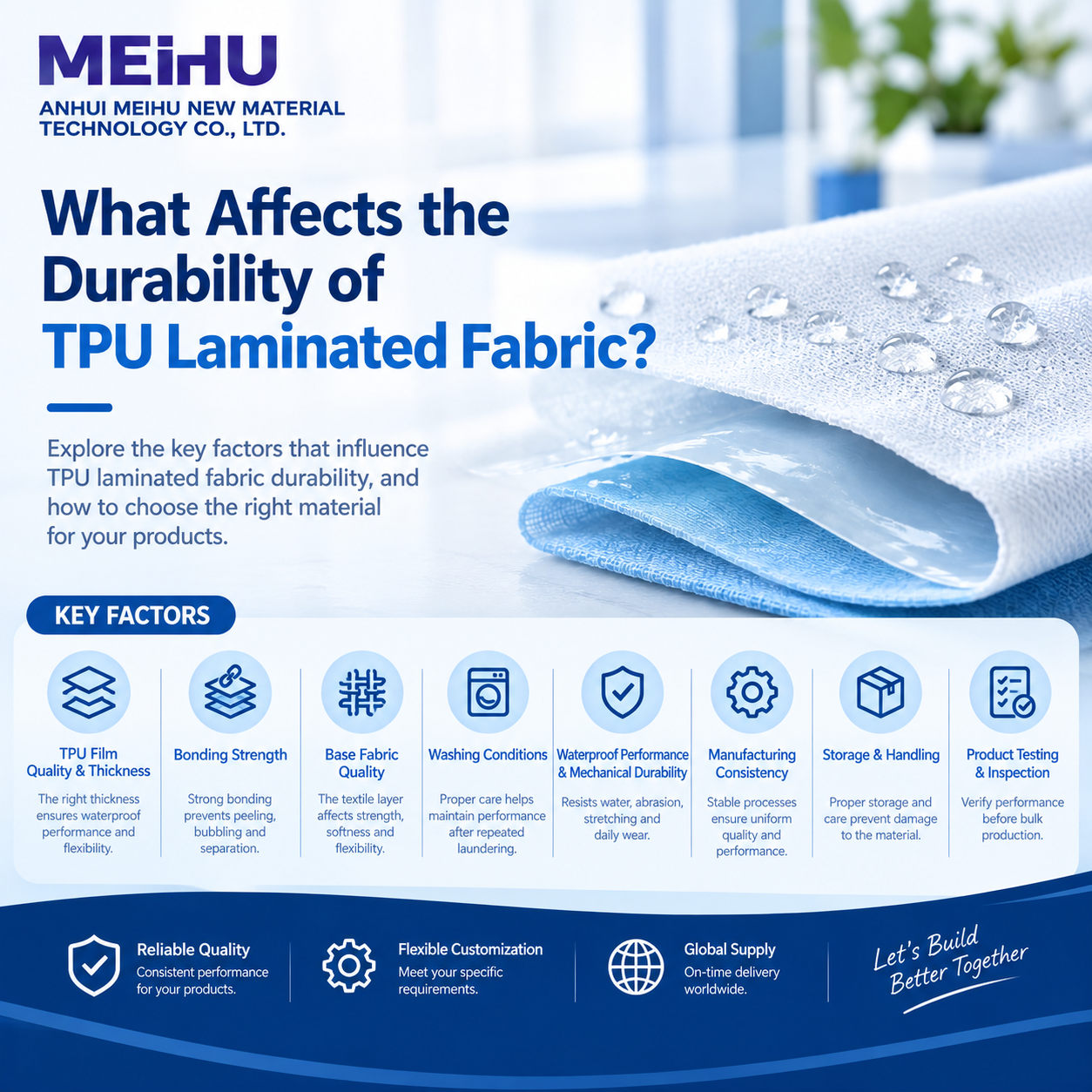
Introduction
TPU laminated fabric is widely used in waterproof mattress protectors, mattress covers, protective bedding, and healthcare textiles. It combines a textile surface with a thermoplastic polyurethane (TPU) membrane to provide a barrier against liquid penetration.
For manufacturers and B2B buyers, waterproof performance is only part of the requirement. The fabric must also maintain its structure and functionality during regular use, handling, and washing.
So, what determines the durability of TPU laminated fabric, and how can buyers select the right material for their products?
1. TPU Film Quality and Thickness
The TPU membrane plays an important role in the waterproof performance of laminated fabric.
Film thickness is one factor that buyers should consider, but thicker does not automatically mean better. The appropriate thickness depends on the product’s intended application, flexibility requirements, waterproof performance, and expected use conditions.
For example, a lightweight fitted mattress protector may require a different material construction from a heavy-duty protective cover.
When comparing TPU waterproof fabric, confirm the membrane thickness and evaluate it together with the complete fabric structure.
Buyers should also request relevant test results rather than relying on thickness alone to predict durability.
2. Bonding Strength Between the Fabric and TPU Membrane
TPU laminated fabric consists of multiple layers, so the connection between the textile and the membrane is critical.
If the bonding process is not properly controlled, the layers may separate during washing, stretching, or repeated use.
Common warning signs include:
Bubbles or uneven areas on the surface
Peeling or separation between layers
Changes in the fabric’s appearance after washing
Localized defects that affect waterproof performance
The bonding process must be appropriate for the selected textile and TPU membrane.
For B2B buyers, it is useful to ask suppliers about their lamination process, quality inspection procedures, and available bonding or delamination test results.
3. The Quality of the Base Fabric
The textile layer also affects the overall durability of TPU laminated fabric.
Different base fabrics offer different combinations of softness, flexibility, strength, and surface texture.
Common choices include:
Knitted polyester: Flexible and suitable for fitted mattress protectors.
Cotton terry: Provides an absorbent, textured surface.
Microfiber: Offers a smooth hand feel and is commonly used in bedding.
Other knitted or woven textiles: Selected according to the product design and performance requirements.
The base fabric should be suitable for the intended end use and compatible with the lamination process.
For customized projects, buyers should evaluate the textile and membrane as one integrated material rather than selecting each layer independently.
4. Washing Conditions and Care Requirements
Repeated washing can affect the performance of waterproof bedding.
Water temperature, detergent, mechanical action, drying temperature, and washing frequency may all influence the fabric’s long-term condition.
Excessive heat or unsuitable washing conditions can contribute to material degradation or bonding problems, depending on the construction.
For reusable mattress protectors, manufacturers should establish care instructions that are compatible with the selected fabric.
Before approving a material for mass production, consider testing it under the expected care conditions:
1.Record the fabric’s initial condition and waterproof performance.
2.Wash the sample using the proposed care procedure.
3.Inspect for peeling, bubbling, shrinkage, and surface changes.
4.Recheck waterproof performance using the same test method.
5.Compare the results with the agreed acceptance criteria.
For products intended for frequent laundering, washing durability should be evaluated during material selection rather than after mass production.
5. Waterproof Performance and Mechanical Durability
Waterproof performance and mechanical durability are related, but they are not the same thing.
A fabric may resist water penetration under a particular test condition while still being vulnerable to abrasion, stretching, or damage caused by sharp objects.
The appropriate tests depend on the final application.
For mattress protector fabric, buyers may need to evaluate:
Hydrostatic pressure resistance
Tensile or tear strength, where relevant
Abrasion resistance, where relevant
Flexibility and surface integrity
Waterproof performance after washing
Healthcare or institutional applications may require additional performance criteria. Buyers should define these requirements according to the product’s actual use and applicable standards.
A clear specification helps ensure that suppliers are evaluating the material against the same expectations.
6. Manufacturing Process Consistency
Even when the same raw materials are used, manufacturing conditions can affect the final product.
Variations in lamination conditions, material handling, and process control may lead to inconsistent bonding, appearance, or performance.
For bulk purchasing, consistency matters as much as the quality of an individual sample.
Before production, buyers should confirm:
The approved fabric construction
The target GSM and usable width
The specified TPU thickness
The required waterproof performance
The inspection and acceptance criteria
How changes to materials or processes will be communicated
For repeat orders, retaining an approved reference sample and technical specification can help reduce unnecessary variation between batches.
7. Storage, Handling, and Converting
Durability can also be affected by how laminated fabric is stored and processed after manufacturing.
During storage and transportation, the material should be protected from conditions that may damage the textile or membrane. Fabric rolls should be handled in accordance with the supplier’s recommendations.
During conversion into finished products, cutting, sewing, and other processing operations should be suitable for the selected construction.
For example, the finished waterproof mattress protector may require attention to seams and stitching because the waterproof performance of the complete product depends on more than the fabric alone.
Manufacturers should evaluate the finished item when the end-use performance depends on its construction.
8. How to Choose TPU Laminated Fabric for Your Project
Before selecting a TPU laminated fabric supplier, prepare a clear product brief.
Include the following information:
Specification What to confirm
Application Mattress protector, mattress cover, healthcare bedding, or another product
Face fabric Polyester knit, cotton terry, microfiber, or other construction
Fabric weight Required GSM
Usable width Width needed for cutting and production
TPU membrane Required thickness and construction
Waterproof performance Target level and test method
Durability Washing and mechanical performance requirements
Order details Sample quantity, estimated bulk quantity, and delivery schedule
Providing these details helps suppliers recommend a suitable material and reduces the risk of comparing products with different specifications.
Conclusion
The durability of TPU laminated fabric depends on several factors, including TPU film quality, membrane thickness, bonding strength, base fabric, washing conditions, and manufacturing consistency.
For mattress protector manufacturers and other B2B buyers, the best approach is to evaluate the complete material against clearly defined performance requirements rather than relying on a single specification.
Anhui Meihu New Material Technology Co., Ltd. supplies TPU laminated waterproof fabrics and waterproof bedding products for B2B customers. We support material selection and customized development based on the requirements of different applications.
Contact us to discuss TPU laminated fabric for your next product development project.
Email: trade@anhuimeihu.com
Website: www.meihumaterial.com
Post time: Oct-15-2026