
What Is TPU Laminated Fabric? A Complete Guide for Bedding Manufacturers
If you’re sourcing materials for mattress protectors, pillow covers, or waterproof bedding products, you’ve likely come across the term “TPU laminated fabric.” But what exactly is it, how does it work, and why has it become the industry standard for waterproof bedding manufacturers worldwide? This guide covers everything you need to know.
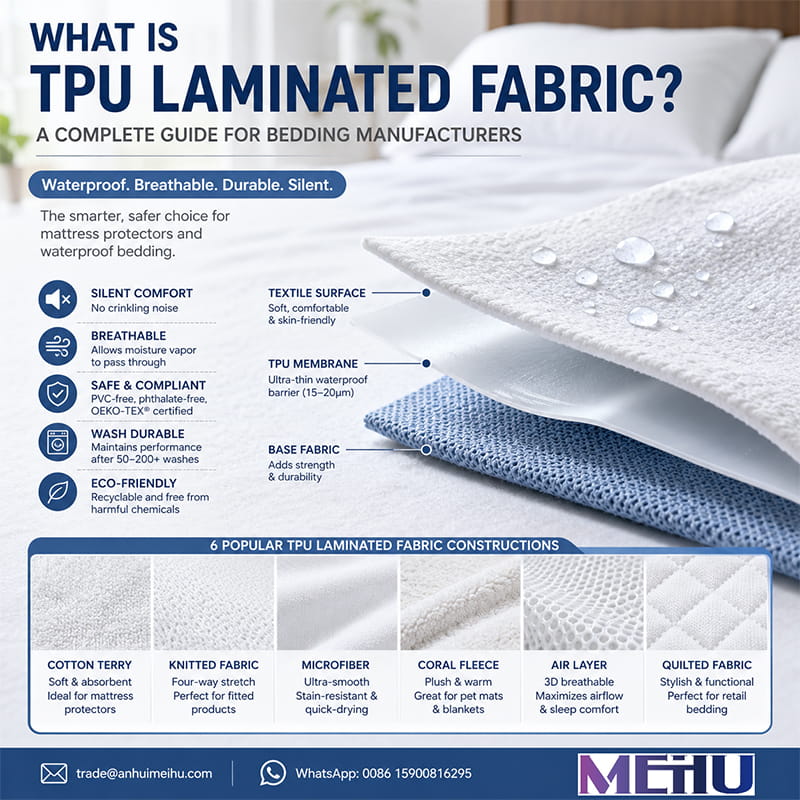
What Is TPU?
TPU stands for Thermoplastic Polyurethane. It is a flexible, durable polymer that can be produced in ultra-thin film form and bonded to textile surfaces to create a waterproof barrier. Unlike older waterproofing methods that relied on PVC (polyvinyl chloride) coatings, TPU is free from harmful plasticizers such as phthalates, making it a safer and more environmentally responsible choice for bedding applications.
How Is TPU Laminated Fabric Made?
TPU laminated fabric is produced by bonding a thin TPU membrane to a base textile using heat and pressure. The result is a composite material that combines the softness and breathability of the textile surface with the liquid-barrier performance of the TPU layer.
The TPU film thickness typically ranges from 15 to 20 microns for bedding applications. Thinner films offer a softer hand feel and better breathability, while thicker films provide enhanced durability for institutional or high-frequency washing environments such as hospitals and hotels.
Why Is TPU the Preferred Choice for Waterproof Bedding?
There are several reasons why TPU has replaced PVC and other waterproofing methods as the material of choice for professional bedding manufacturers:
Silent performance. TPU membranes are flexible and do not produce the crinkling noise associated with older PVC-backed fabrics. This is a critical requirement for consumer mattress protectors and premium retail bedding products.
Breathability. TPU can be formulated to allow moisture vapor transmission, meaning the fabric can breathe while still blocking liquid penetration. This significantly improves sleep comfort compared to non-breathable waterproof materials.
Safety and compliance. TPU is free from PVC, phthalates, and heavy metals, making it compatible with OEKO-TEX Standard 100 certification and suitable for baby bedding, medical textiles, and products sold in regulated markets such as the EU and North America.
Wash durability. High-quality TPU lamination maintains its waterproof performance after repeated machine washing at temperatures up to 60°C, which is essential for both consumer and institutional use.
Environmental profile. TPU is recyclable and does not release harmful dioxins during manufacturing or disposal, unlike PVC-based materials.
What Base Fabrics Can Be Combined with TPU?
The versatility of TPU lamination means it can be applied to a wide range of textile surfaces, each suited to different product applications:
Cotton Terry + TPU — Soft, absorbent surface ideal for mattress protectors, baby bedding, and medical care textiles. The cotton loops provide natural moisture absorption while the TPU backing prevents liquid from passing through.
Knitted Fabric + TPU — Four-way stretch construction suitable for fitted mattress protectors and pillow covers. The stretch recovery ensures a secure, wrinkle-free fit across different product sizes.
Microfiber + TPU — Ultra-smooth surface with excellent stain resistance, preferred by hospitality buyers and premium retail bedding brands. Dries faster than cotton-based alternatives.
Coral Fleece + TPU — Dense, plush surface widely used for pet mats, blankets, and sofa protectors. Provides warmth and softness alongside reliable liquid barrier performance.
Air Layer + TPU — Three-dimensional fabric structure that maximizes airflow and reduces heat buildup during sleep. The preferred choice for premium and orthopedic mattress protector brands.
Quilted Fabric + TPU — Decorative quilting patterns combined with waterproof backing, designed for retail private label products where aesthetics and functionality must coexist.
Key Specifications to Discuss with Your Supplier
When sourcing TPU laminated fabric for your production, the following specifications will determine the final performance of your finished product:
GSM (grams per square meter) — Total fabric weight affects softness, durability, and cost. Different fabric constructions — such as microfiber, cotton terry, or air layer — vary significantly in standard GSM range. Always confirm the available weight options with your supplier based on your end product requirements.
TPU film thickness — Thinner TPU films deliver a softer hand feel and better breathability, while thicker films offer greater durability for high-frequency washing environments such as hospitals and hotels. Ask your supplier which thickness options are available for each fabric type.
Width and color — Available widths vary by fabric construction. Custom colors are generally available subject to MOQ requirements. Confirm standard and custom options directly with your supplier.
MOQ, sampling, and lead time — These vary by factory and order complexity. When evaluating a supplier, always clarify minimum order quantities, sample development time, and bulk production lead time before committing to a sourcing decision.
Choosing the Right TPU Laminated Fabric for Your Product
The right fabric depends on your target market, end-use application, and product positioning. Medical and institutional buyers typically prioritize wash durability and compliance certifications. Consumer retail brands focus on softness, breathability, and noise performance. Pet product manufacturers value plush surface feel and reliable liquid resistance.
Working with a factory that offers multiple TPU laminated fabric options and technical support ensures you can match the right material to your specific product requirements without compromising on quality or cost efficiency.
If you’re currently manufacturing or developing waterproof mattress protectors, understanding the fabric construction behind your product is the first step to making better sourcing decisions.
At Meihu, we manufacture a full range of TPU laminated fabrics covering all six constructions above. All are available with custom GSM, width, and TPU specifications, with OEM and ODM services for brands at all scales. Contact us to request samples or discuss your sourcing requirements.
Email: trade@anhuimeihu.com | WhatsApp: 0086 15900816295
Post time: Jun-01-2026