
In today’s bedding and home textile industry, consumers are no longer looking only for comfort and softness. More and more buyers are paying attention to functionality, hygiene, durability, and long-term mattress protection. As a result, waterproof bedding products such as mattress protectors, pillow protectors, and waterproof fitted sheets have become increasingly popular around the world.
Behind many of these products is an important material technology: TPU waterproof fabric.
TPU laminated fabrics are now widely used in home bedding, hospitality textiles, healthcare products, baby care items, and even pet care products. But what exactly is TPU waterproof fabric, and why has it become one of the most preferred materials in the bedding industry?
This article explains the structure, advantages, applications, and market trends of TPU waterproof fabric in bedding products.
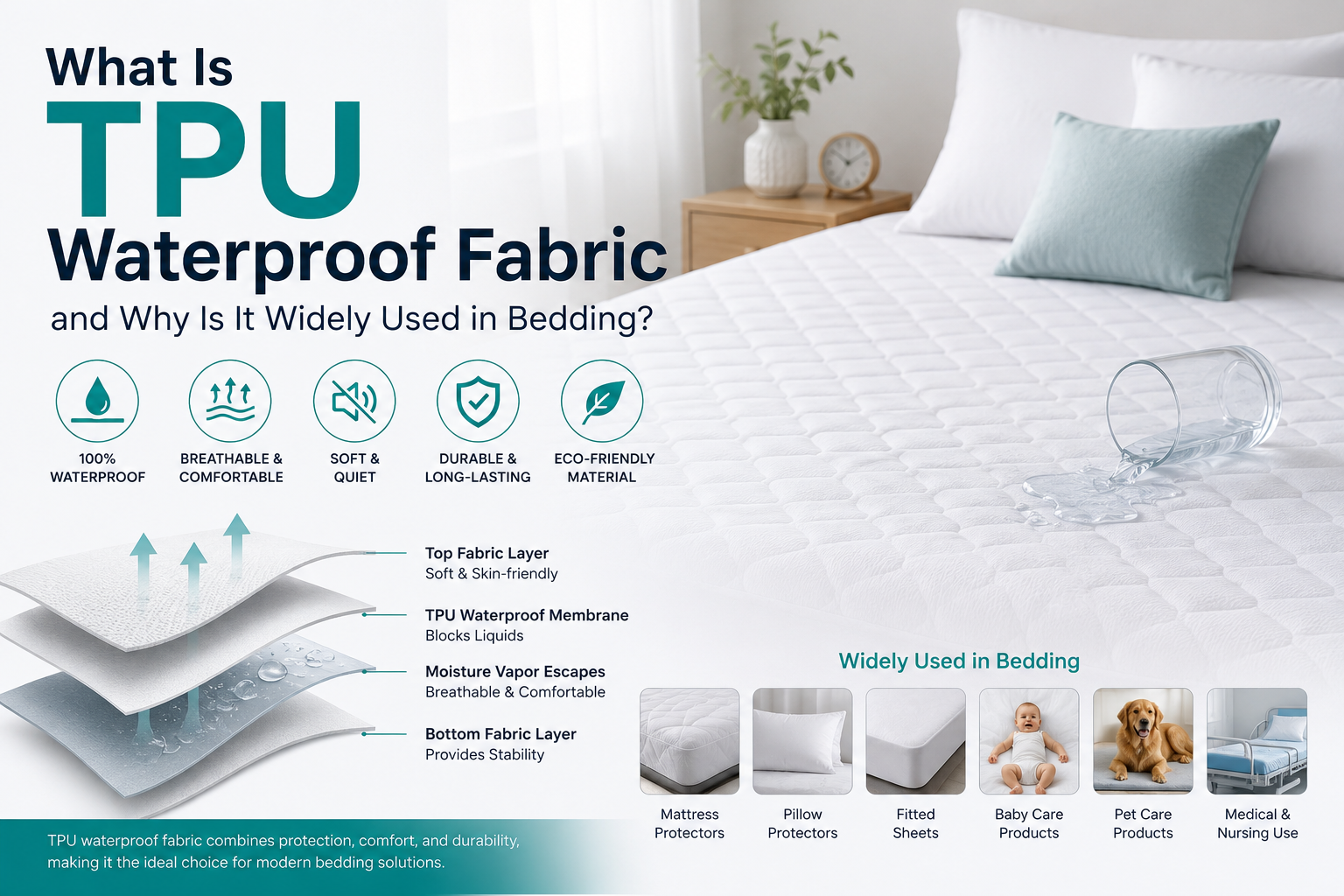
What Is TPU Waterproof Fabric?
TPU stands for Thermoplastic Polyurethane, a flexible and durable waterproof material commonly used in textile lamination.
In bedding applications, TPU is usually laminated to fabrics such as:
- Knitted polyester fabric
- Cotton terry fabric
- Bamboo fiber fabric
- Tencel™ fabric
- Microfiber fabric
The TPU layer creates a waterproof barrier while still allowing air and water vapor to pass through. This combination makes TPU fabric both waterproof and breathable, which is essential for comfortable bedding products.
Unlike traditional plastic-based waterproof materials, TPU offers a softer hand feel, lower noise, and better flexibility.
How TPU Waterproof Fabric Works
TPU waterproof fabric works through a laminated structure.
Generally, the fabric consists of:
1. A top textile layer for comfort and softness
2. A bottom TPU membrane for waterproof protection
The TPU membrane contains microscopic molecular structures that block liquid penetration while still allowing heat and moisture vapor to escape.
This means:
- Liquids such as water, sweat, urine, or spills cannot pass through
- Air circulation remains possible
- Sleep comfort is maintained
Because of this balance, TPU waterproof fabrics are widely used in bedding products where both protection and comfort are important.
Why TPU Is Widely Used in Bedding Products
1. Waterproof Protection
One of the biggest advantages of TPU fabric is reliable waterproof performance.
Mattresses are expensive and difficult to clean. A waterproof TPU layer helps protect mattresses from:
- Sweat
- Liquid spills
- Urine accidents
- Pet saliva or stains
- Moisture damage
This significantly extends mattress lifespan and improves hygiene.
For hotels, hospitals, and families with children or pets, waterproof protection has become increasingly important.
2. Breathability and Sleeping Comfort
Traditional waterproof materials such as PVC often trap heat and moisture, making sleep uncomfortable.
TPU is different.
High-quality TPU membranes allow moisture vapor and heat to escape, helping reduce:
- · Night sweating
- · Heat buildup
- · Humidity accumulation
This makes TPU waterproof bedding much more comfortable for long-term sleeping use.
3. Soft and Quiet Material
Consumers today dislike noisy waterproof mattress protectors.
Compared with traditional plastic waterproof materials, TPU is:
- · Softer
- · More flexible
- · Less noisy during movement
This is especially important for premium bedding products and hospitality applications where sleep quality matters.
4. Machine Washable and Durable
TPU laminated fabrics are suitable for repeated washing and daily use.
High-quality TPU bedding products can maintain:
- Waterproof performance
- Flexibility
- Fabric stability
after multiple wash cycles when properly cared for.
This makes TPU an ideal solution for:
- Hotels
- Hospitals
- Nursing care facilities
- Long-term residential use
5. More Eco-Friendly Than PVC
As sustainability becomes more important, many bedding brands are moving away from PVC materials.
TPU is generally considered:
- Safer
- More environmentally friendly
- Free from some harmful plasticizers commonly associated with PVC
Many international buyers now specifically request TPU instead of PVC for bedding applications.
Common Applications of TPU Waterproof Fabric
TPU waterproof fabric is widely used in many bedding and textile products, including:
Waterproof Mattress Protectors
One of the most common applications. TPU helps protect mattresses while maintaining comfort and breathability.
Waterproof Pillow Protectors
Protect pillows from sweat, saliva, stains, and allergens.
Waterproof Fitted Sheets
Popular in households, hotels, and healthcare environments.
Baby Care Products
Used in baby changing pads, crib protectors, and washable baby bedding.
Medical and Nursing Products
Suitable for hospitals and elderly care because of hygiene requirements.
Pet Care Products
Used in waterproof pet mats, pet beds, and protective covers.
TPU vs PVC: What’s the Difference?
Many buyers ask about the difference between TPU and PVC waterproof fabrics.
Here are some key comparisons:
| Feature | TPU | PVC |
| Breathability | Better | Low |
| Softness | Soft | Stiffer |
| Noise Level | Quiet | Noisy |
| Eco-Friendliness | Better | Lower |
| Flexibility | High | Medium |
| Comfort for Bedding | Excellent | Basic |
Because bedding products require both comfort and protection, TPU has become the preferred choice for many premium manufacturers and brands.
Market Trends for TPU Waterproof Bedding
Global demand for functional bedding products continues to grow.
Consumers increasingly look for:
- Waterproof protection
- Anti-allergy features
- Breathable materials
- Cooling or thermo-regulating bedding
- Washable and hygienic sleep products
As a result, TPU waterproof fabrics are becoming a key material in modern bedding manufacturing.
Many OEM bedding brands are now developing:
- Cooling mattress protectors
- Thermo-regulating bedding
- Waterproof quilted protectors
- Premium breathable bedding collections
using TPU laminated fabrics as the core waterproof layer.
Choosing the Right TPU Waterproof Fabric
When selecting TPU waterproof fabric for bedding products, buyers should consider:
- Fabric surface material
- TPU thickness
- Breathability level
- Waterproof performance
- Wash durability
- Softness and hand feel
Different applications may require different fabric structures.
For example:
- Hotels may prioritize durability
- Premium home brands may prioritize softness
- Medical products may prioritize hygiene and waterproof reliability
The Future of Functional Bedding
TPU waterproof fabric has transformed the bedding industry by combining waterproof protection with comfort and breathability.
As consumers continue to seek healthier, cleaner, and more functional sleep environments, TPU-based bedding products are expected to grow even further in global markets.
From mattress protectors and pillow covers to advanced thermo-regulating bedding systems, TPU technology will continue playing an important role in the future of functional textiles.
As a professional manufacturer of waterproof bedding fabrics and finished bedding products, we continue exploring innovative TPU solutions for home, hospitality, healthcare, and OEM bedding applications worldwide.
Post time: May-14-2026